Cancer diagnosis and treatment have traditionally relied on tissue biopsies—procedures where a piece of tumor is surgically removed and examined. While these methods remain essential, they can be invasive, painful, and sometimes impractical when tumors are hard to reach or when repeated sampling is needed. Over the past decade, a new approach called liquid biopsy has begun to reshape oncology by offering a less invasive window into cancer biology, often through a simple blood test.
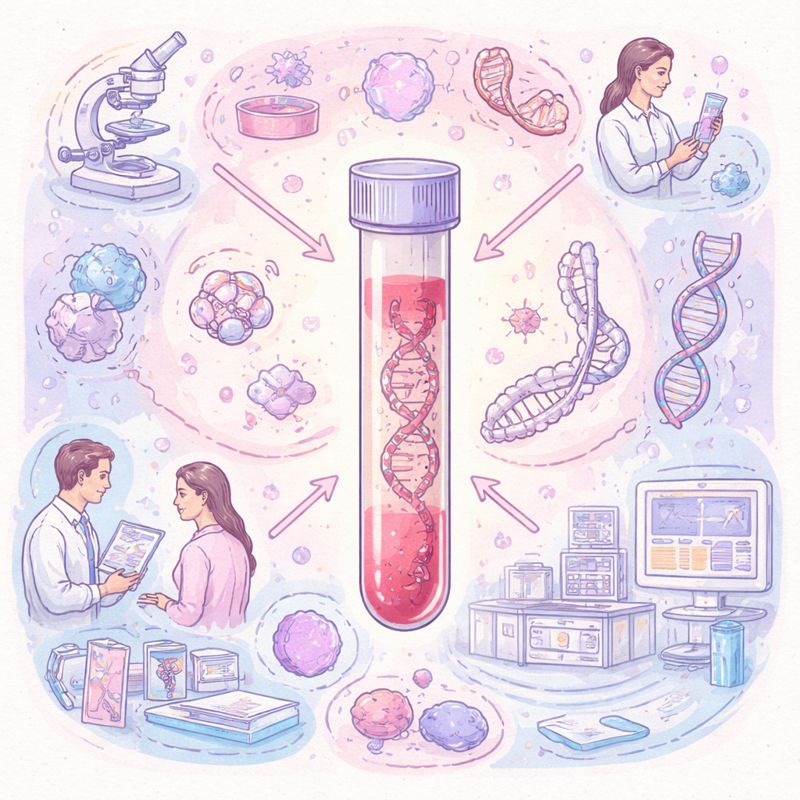
At its core, a liquid biopsy looks for traces of cancer that tumors shed into bodily fluids such as blood. Cancer cells release fragments of DNA, RNA, proteins, and sometimes even whole cells into circulation. By capturing and analyzing these signals, clinicians can gain insights into the presence, behavior, and evolution of cancer without directly sampling the tumor itself.
Understanding What a Liquid Biopsy Detects
The most commonly discussed component of liquid biopsy is circulating tumor DNA, often abbreviated as ctDNA. These are tiny fragments of genetic material released into the bloodstream when cancer cells die or actively shed DNA. Advanced sequencing technologies can detect specific mutations within ctDNA that are characteristic of different cancers. In addition to DNA fragments, liquid biopsies may also analyze circulating tumor cells, small numbers of intact cancer cells floating in the blood, as well as other molecular markers such as RNA or methylation patterns.
For a lay person, it may help to imagine a tumor as constantly leaving breadcrumbs in the bloodstream. Liquid biopsy is essentially a way of collecting and interpreting these breadcrumbs to understand what is happening inside the body.
Applications Across the Cancer Journey
One of the most promising uses of liquid biopsy is in cancer detection and diagnosis. In certain cancers, especially when tissue biopsy is difficult or risky, liquid biopsy can provide crucial genetic information that supports diagnosis. In some settings, it is also being explored as a tool for early cancer detection, identifying cancer-related DNA changes before symptoms appear. While population-wide screening using liquid biopsy is still an area of active research, early results suggest potential for detecting cancers at an earlier and more treatable stage.
Liquid biopsy has already made a significant impact on treatment selection. Modern cancer therapy increasingly depends on identifying specific genetic changes within a tumor. These changes can predict whether a patient is likely to benefit from a targeted therapy or immunotherapy. A blood-based test can reveal these actionable mutations quickly, sometimes faster than traditional tissue testing, enabling clinicians to choose the most appropriate treatment without delay.
Another major application lies in monitoring response to treatment. Unlike a tissue biopsy, which is usually performed once, liquid biopsy can be repeated multiple times during therapy. Falling levels of ctDNA may indicate that treatment is working, while rising levels can signal that the cancer is not responding or is starting to grow again. In some cases, molecular changes in blood can be detected weeks or months before changes are visible on imaging scans.
Liquid biopsy is also transforming how clinicians understand treatment resistance. Cancers evolve over time, especially under the pressure of therapy. New genetic mutations can emerge that allow cancer cells to escape the effects of drugs. Liquid biopsy can identify these resistance-related changes early, allowing doctors to adjust treatment strategies before the disease progresses clinically.
Benefits for Patients and Clinicians
The most obvious advantage of liquid biopsy is that it is minimally invasive. A blood draw is far less burdensome than surgery or needle biopsy, particularly for patients who are frail or have advanced disease. This ease enables more frequent testing, which in turn supports real-time monitoring of cancer dynamics.
Liquid biopsy also offers a more comprehensive view of cancer heterogeneity. A single tissue biopsy samples only one part of a tumor, whereas cancer cells in the bloodstream may originate from multiple tumor sites. This can provide a broader picture of the genetic diversity within a cancer, which is especially relevant in metastatic disease.
From a health system perspective, liquid biopsy can sometimes reduce delays in care. Faster turnaround times and fewer procedure-related complications can streamline clinical decision-making and improve patient experience.
Current Limitations and Challenges
Despite its promise, liquid biopsy is not a perfect replacement for tissue biopsy. In very early cancers or in tumors that shed little DNA into the bloodstream, ctDNA levels may be too low to detect reliably. False negatives can occur, meaning a test may fail to detect cancer-related signals even when cancer is present.
Interpreting results also requires expertise. Not all detected genetic changes originate from cancer; some arise from age-related changes in blood cells. Distinguishing these signals is essential to avoid misinterpretation.
Cost, access to advanced laboratories, and the need for standardized testing and interpretation remain important challenges, particularly in low- and middle-income settings.
Where the Field Is Heading
The future of liquid biopsy in oncology is moving toward earlier detection, greater sensitivity, and broader clinical integration. Researchers are developing multi-cancer detection tests that analyze patterns of DNA changes rather than single mutations, potentially allowing one blood test to screen for several cancers at once.
Advances in artificial intelligence are helping interpret complex molecular data, improving accuracy and clinical usefulness. Liquid biopsy is also being combined with imaging and clinical data to create more personalized and adaptive cancer care pathways.
In the coming years, liquid biopsy is likely to become a routine companion to tissue biopsy rather than a competitor. Together, they offer complementary insights—one providing direct histological detail and the other offering a dynamic, real-time view of cancer evolution.
A New Chapter in Cancer Care
For patients, liquid biopsy represents a shift toward gentler, more precise, and more responsive cancer care. While it does not eliminate the need for traditional diagnostic methods, it adds a powerful tool to the oncology arsenal. As technology matures and access expands, liquid biopsy has the potential to make cancer management more proactive, personalized, and patient-friendly, marking a significant step forward in how we understand and treat cancer.