
Family health history is one of the most powerful yet underused tools in modern medicine. Long before genetic tests, sequencing platforms, or precision therapeutics, families carried forward a living record of health and disease through shared stories, diagnoses, and outcomes. Today, that record—when carefully observed and thoughtfully interpreted—remains indispensable for understanding genetic disease and acting on genetic risk.
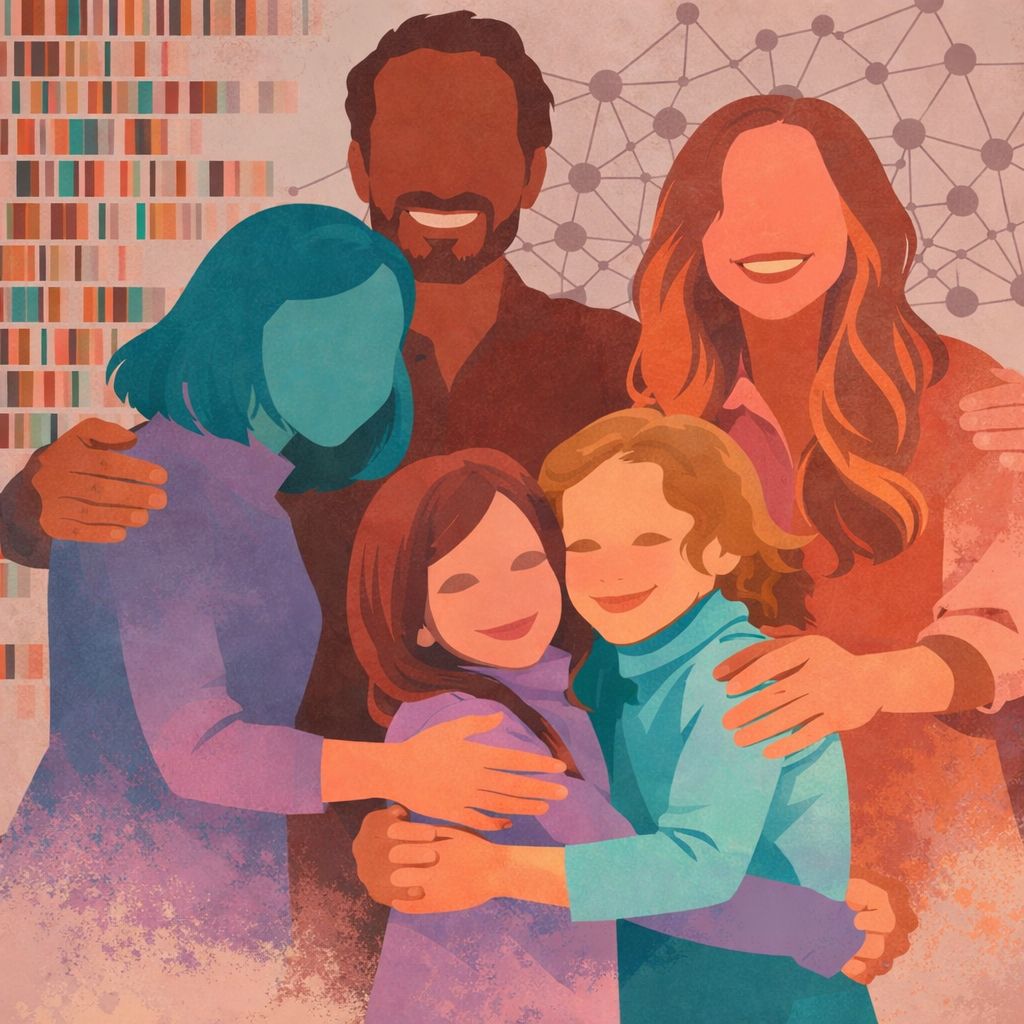
A family health history is, in effect, a practical genetic map. Patterns of illness that recur across generations often signal inherited susceptibilities: cancers appearing earlier than expected, heart disease clustering among close relatives, neurological conditions repeating with striking similarity. These patterns rarely occur by chance. They reflect shared genetic architecture interacting with shared environments, lifestyles, and behaviors. When clinicians and individuals recognize these signals early, risk transforms from a vague concern into actionable knowledge.
The closeness of a family pedigree dramatically increases its value. Information from first- and second-degree relatives—parents, siblings, children, grandparents, aunts, and uncles—provides the most meaningful insight into inherited risk. A tightly connected pedigree allows clinicians to distinguish sporadic disease from inherited predisposition, to estimate risk with greater accuracy, and to determine when genetic testing is appropriate. In many cases, a well-documented family history can guide surveillance and prevention even before a specific gene variant is identified.
Importantly, family health history empowers action. It enables earlier screening, tailored lifestyle interventions, informed reproductive decisions, and timely referral for genetic counseling. For conditions where prevention or early detection saves lives, this foresight is invaluable. It also reframes genetics as something proactive rather than deterministic: knowledge does not predict inevitability, it creates opportunity.
In an era increasingly defined by genomic data, family health history remains the essential context that gives those data meaning. It connects biology to lived experience and transforms inherited risk into informed care. Capturing and sharing this knowledge within families is not merely an exercise in record keeping—it is an investment in health across generations.Ac
What you need to know about Family Health History
Views: 42