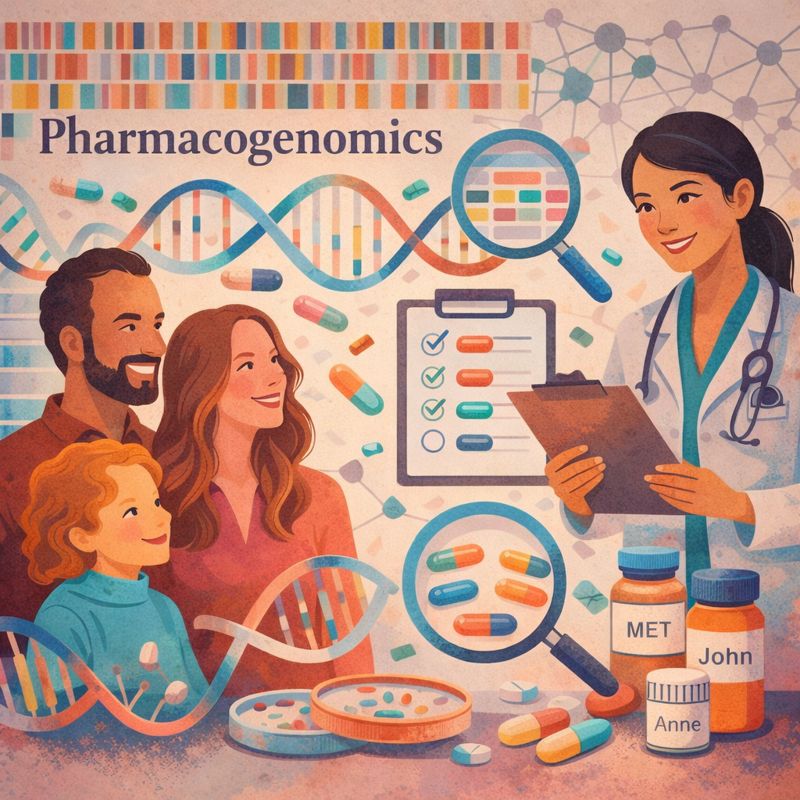
Pharmacogenomics (pronounced far-muh-koh-juh-NOH-miks) is the study of how your genes affect the way your body responds to medicines. In simple terms, it helps explain why the same drug can work well for one person, cause side effects in another, and do very little for someone else.
Your body uses proteins—often made based on instructions in your DNA—to break down medicines, move them through the body, or allow them to do their job. Small genetic differences can change how fast or slow a medication is processed. For example, some people break down a drug so quickly that it never reaches a helpful level, while others process it so slowly that it builds up and causes unwanted effects.
Pharmacogenomic testing usually involves a cheek swab or blood sample. The results can help healthcare providers choose the right medicine and dose for you, especially for certain antidepressants, pain medicines, heart drugs, and cancer treatments.
It’s important to know that pharmacogenomics doesn’t predict every reaction, and it doesn’t replace medical advice. But it can add valuable information to make prescribing safer and more personalized—helping move healthcare toward “the right medicine, at the right dose, for the right person.”