Getting a genetic test result can feel overwhelming—especially when you see a term like “Variant of Uncertain Significance” (VUS). If you’ve received a VUS result, the good news is this: it does not mean you have a disease, and it does not automatically mean your family members are at risk.
Let’s break it down simply.
What is a VUS?
A variant is a small difference in your DNA. Everyone has thousands of genetic variants—most are harmless and simply make us unique.
A Variant of Uncertain Significance (VUS) means:
- A change was found in a gene, but
- Scientists do not yet have enough evidence to say whether it is:
- harmless (benign), or
- disease-causing (pathogenic)
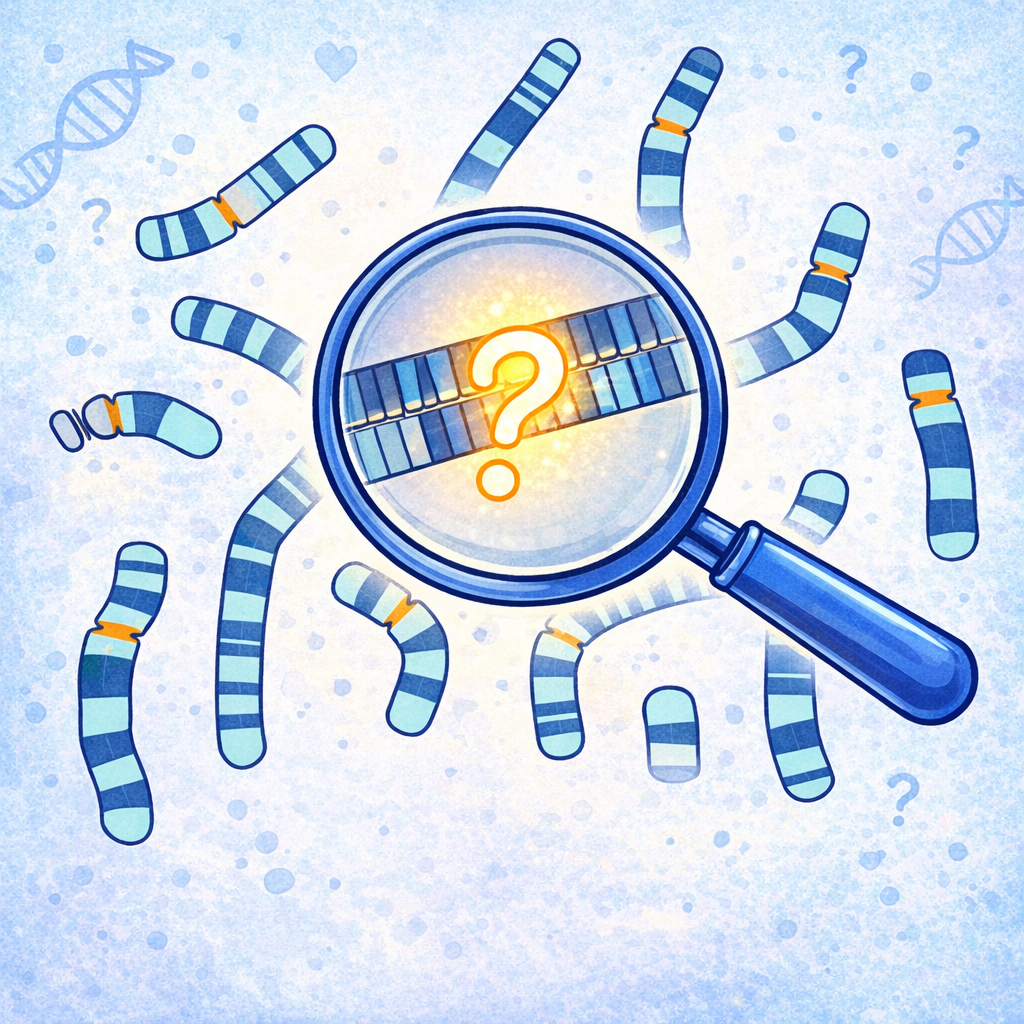
In short, a VUS is a genetic finding that is still “under study.”
Why does a VUS happen?
A VUS result is common, especially when more genes are tested (like in exome or genome sequencing). It can happen because:
- Not enough people with the same variant have been studied yet
- The variant is rare, and there’s limited global data
- Different populations may have different normal genetic patterns
- We don’t fully understand every part of every gene (yet)
Genetics is advancing quickly, but some answers take time.
Does a VUS mean I will get a genetic disease?
No. Not necessarily.
A VUS is not a confirmed diagnosis. Many VUS results later turn out to be benign (harmless). Some may later be confirmed as disease-causing, but until that happens, it remains uncertain.
This is why doctors usually do not make major medical decisions based on a VUS alone.
What should you do if your report shows a VUS?
Here are the most helpful and practical steps:
1) Don’t panic—and don’t assume the worst
A VUS is best understood as:
“We found something, but we don’t know what it means yet.”
It is not the same as a positive result.
2) Discuss the result with a genetic counselor or specialist
A genetic counselor can explain:
- what the gene is related to
- whether your symptoms match the condition linked to that gene
- whether this VUS is likely to be important or not
They can also guide your next steps safely.
3) Do not change treatment or undergo surgery based only on a VUS
In most cases, a VUS should not lead to decisions like:
- preventive surgery
- stopping a medication
- major long-term treatment changes
Your doctor will consider your personal medical history, symptoms, and family history first.
4) Review your family history carefully
Even if a VUS is uncertain, your family history can still provide clear risk clues.
For example:
- multiple relatives with early cancer
- repeated miscarriages or genetic conditions in the family
- similar symptoms in close relatives
Sometimes, your doctor may recommend screening or follow-up based on family history alone.
5) In some cases, family testing may help
Your healthcare team may suggest testing certain family members to see whether the VUS:
- is present in relatives with the condition, or
- is also found in healthy relatives
This can provide clues—but it doesn’t always give a final answer.
6) Ask about reclassification (future updates)
One important fact: a VUS can be reclassified over time as more research becomes available.
It may later become:
- Benign / Likely benign (harmless), or
- Pathogenic / Likely pathogenic (disease-causing)
Ask your testing lab or doctor:
- “Will I be informed if this VUS is reclassified?”
- “Should I follow up again in 1–2 years?”
The key message to remember
A VUS is not a diagnosis.
It is a “maybe” result that requires more evidence.
What matters most right now is:
- your symptoms (if any)
- your medical history
- your family history
- guidance from your doctor or genetic counselor
When should you seek help urgently?
You should follow up promptly if:
- you have strong symptoms and no diagnosis yet
- there is a strong family history of inherited disease
- the report includes other findings besides the VUS
- you feel anxious and need clear guidance (this is very common)
Final reassurance
Genetic testing is a powerful tool, but not every result gives an immediate clear answer. A VUS simply reflects where science is today—not something you did wrong, and not something you should fear.