Many people believe genetics is something you only think about after a diagnosis. But one of the simplest and most powerful tools for predicting health risk is already available to you: your family history. A well-recorded family health history can reveal patterns that suggest an increased genetic risk, and it can help doctors recommend the right screening or testing before serious illness develops.
Family history is useful because it reflects more than just shared genes. Families often share lifestyle habits, diet, environment, and even similar exposures over time. That means family history can point to both inherited risk and shared influences. However, when certain patterns repeat across relatives—especially at younger ages or in specific combinations—it can strongly suggest a genetic predisposition that deserves attention.
One important pattern to watch for is cancer diagnosed at an unusually young age. For many cancers, diagnosis before the age of 50 can be a red flag. Early-onset cancers may indicate an inherited risk that increases the chance of developing cancer earlier than expected. Another pattern is multiple close relatives with the same type of cancer, such as several family members with breast cancer, colon cancer, or ovarian cancer. When the same cancer appears repeatedly on one side of the family, it raises the possibility of a shared inherited genetic change.
A third pattern is a person in the family who has had more than one cancer, especially if those cancers are known to be linked in hereditary syndromes. For example, a combination of breast and ovarian cancer, or colon cancer and uterine cancer, may suggest an inherited cancer risk condition. Similarly, rare cancers or unusual tumor types can sometimes be clues, especially if they appear in more than one relative.
Family history can also reveal inherited risks beyond cancer. For example, heart attacks, strokes, or sudden cardiac deaths at a young age may point toward inherited cholesterol disorders or heart rhythm conditions. If several relatives have had serious heart events before age 55 in men or 65 in women, it is worth discussing with a doctor. Another important pattern is clustering of certain chronic conditions like diabetes, high blood pressure, and heart disease in many family members. While lifestyle plays a major role, a strong clustering may also indicate inherited susceptibility, meaning prevention and early screening become even more important.
Repeated pregnancy loss, infant deaths, or children with developmental delays or unexplained medical problems can also be significant patterns. These may suggest an inherited genetic condition in the family, especially in communities where consanguinity or endogamy is common. Many recessive genetic disorders remain hidden for generations because carriers are healthy, and the condition appears only when both parents carry the same genetic change.
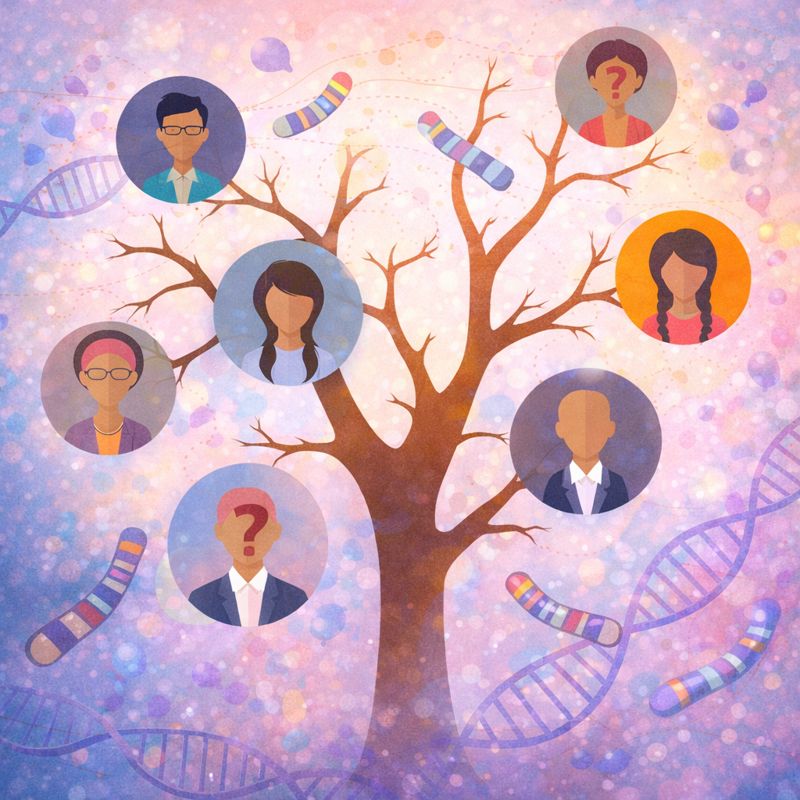
If you notice any of these patterns, the next step is to document your family history clearly. Try to record at least three generations, including grandparents, parents, siblings, children, aunts, uncles, and cousins. The most important details are the condition diagnosed, the age at diagnosis, and whether the person had multiple related health problems. Even if you don’t have perfect medical records, approximate ages and descriptions are still helpful. Bringing this information to a doctor can immediately improve your risk assessment.
Doctors interpret family history by looking for patterns of inheritance, age of onset, and disease clustering. If the history suggests a strong inherited risk, they may recommend genetic counseling and genetic testing. In some cases, they may advise earlier screening even if genetic testing is not done, because family history alone can justify closer monitoring. If genetic testing identifies a disease-causing variant, doctors can then guide screening and prevention not only for the individual, but also for other family members who may be at risk.
Family health stories are deeply personal, but they are also powerful tools for prevention. By paying attention to these patterns early, you can take steps that may help detect disease sooner, reduce risk, and protect your family’s health for generations to come.