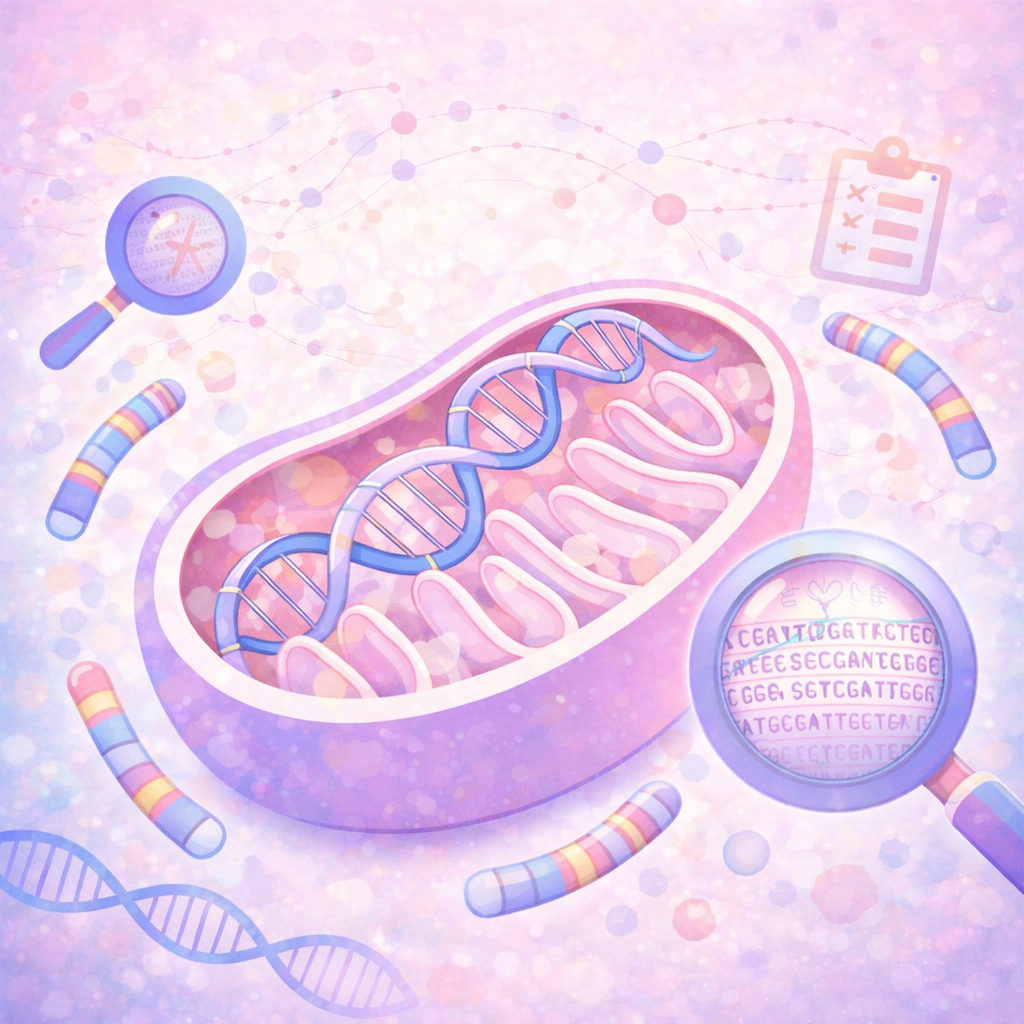
Inside almost every cell in your body lives a tiny power plant called the mitochondrion. These microscopic structures generate the energy that keeps your heart beating, your brain thinking, and your muscles moving. But mitochondria carry something even more surprising: their own DNA. This small but powerful genetic code is sometimes called our “second genome,” and it is becoming a major focus of modern medicine.
Unlike the DNA in the cell nucleus, which comes from both parents, mitochondrial DNA is inherited almost entirely from the mother. This means that a mother can pass a mitochondrial condition to all her children, while fathers do not transmit these disorders at all. This unusual inheritance pattern puzzled doctors for decades, until mitochondrial genetics revealed the answer.
Mitochondrial DNA controls key parts of the cell’s energy machinery. When it is damaged, the body’s most energy-hungry organs suffer first, especially the brain, muscles, heart, liver, and eyes. The result can be a wide range of disorders: developmental delay in children, muscle weakness, seizures, vision loss, hearing impairment, heart disease, or unexplained organ failure. These conditions are rare, complex, and often difficult to recognize.
What makes mitochondrial disease especially challenging is that not all cells carry the same amount of mutated DNA. A person may have a mixture of healthy and damaged mitochondria, a phenomenon called heteroplasmy. The balance can differ between tissues, meaning blood tests may look normal while the brain or muscle is severely affected. Symptoms can also change over time as this balance shifts.
For many years, diagnosing these disorders required multiple tests: muscle biopsies, targeted mitochondrial sequencing, and separate nuclear gene panels. Even then, many patients remained without answers.
Whole-genome sequencing (WGS) is now changing this landscape in a remarkable way. In a single test, WGS reads both the nuclear genome, the main set of genes, and the mitochondrial genome at the same time. This allows doctors to detect mutations in mitochondrial DNA, measure how much of it is affected, and simultaneously analyze hundreds of nuclear genes that control mitochondrial function.
This matters because many mitochondrial disorders are not caused by mitochondrial DNA at all, but by nuclear genes that maintain or repair it. WGS captures both sides of this partnership, dramatically increasing the chance of diagnosis.
The clinical impact is growing quickly. Children with unexplained neurological decline, families with inherited hearing loss, and adults with mysterious muscle disease are now receiving long-awaited explanations. In some cases, diagnosis leads to specific treatments, dietary interventions, or avoidance of drugs that can worsen mitochondrial damage. For families, it provides clarity, accurate recurrence risk, and informed reproductive choices.
Beyond disease, mitochondrial DNA is also a window into human history. Because it passes down maternal lines unchanged for generations, it has been used to trace ancestry and migration across thousands of years.
Your mitochondria may be tiny, but their genome carries enormous importance, for energy, inheritance, disease, and identity. As whole-genome sequencing becomes part of routine care, this “second genome” is finally stepping into the spotlight, revealing how deeply our health depends on the smallest power plants inside us.